- Reform UK wins 10 local councils, 2 mayoralties, and 1 Parliament seat.
- Over 14,000 vote swing in Runcorn and Helsby largest in by election history.
- Reform’s vote share increased by 9.1% in recent by elections
- Poached over 80 former Conservative members and donors
"This isn’t a flash in the pan. This time, Farage has real infrastructure. Reform is converting poll numbers into electoral power."
In a stunning political upset; Nigel Farage's Reform UK party has shattered the traditional (2) two-popular party dominance in the UK's 2025 local elections. The party secured control of 10 local councils, won two mayoralties, and achieved a landmark victory in the Runcorn and Helsby parliamentary by election. This marks the first time a party outside the Conservatives or Labour has captured the largest vote share in local elections.
In the Runcorn and Helsby by-election, Reform UK's Sarah Pochin clinched victory by a mere six votes, overturning a Labour majority of over 14,000 from the 2024 general election. This narrow win is the closest in British parliamentary history, highlighting a significant shift in voter sentiment.
Reform UK's surge is not a fleeting moment. The party increased its vote share by over 9% in council by elections since the 2024 general election, outperforming all other parties. This growth is attributed to a robust grassroots campaign and strategic recruitment of former Conservative candidates and donors.
The rise of Reform UK signals a potential realignment in British politics. With the party gaining traction among disillusioned voters from both major parties, it poses a significant challenge to the established political order. Political analysts suggest that if this momentum continues, Reform UK could become a formidable force in future general elections.

| Cameron 2014: | Defused UKIP by promising Brexit referendum. |
| Starmer 2025: | No “silver bullet” to reclaim lost voters from Reform. |
| Badenoch’s challenge: | Facing internal Tory backlash after local losses. |
| Grassroots power matters | Reform UK has mimicked and adapted from successful local strategies like the Lib Dems. |
| Political fatigue is rising | low turnout indicates emotional detachment from traditional options. |
| Disruption is real | Reform UK is converting ideology into institutional wins, not just Twitter noise. |
| The shift is long-term | analysts suggest this realignment could stretch far beyond 2025. |
Farage has transformed Reform UK from a populist campaign into a strategically structured, boots-on the ground political machine.
Reform delivered millions of personalized letters and outreach campaigns similar to how the Liberal Democrats built lasting influence
Major parties are bleeding voters to Greens, Lib Dems, and now Reform proving Britain’s political center is fracturing
Polling indicates Reform isn’t just attracting right wing voters. It’s resonating with working class communities and small business owners alike.
Quantitatively and Qualitatively Different
The by election was triggered by the resignation of Labour MP Mike Amesbury, following a conviction for assault
Reform UK's victory is attributed to a well organized grassroots campaign, effective voter outreach, and strategic recruitment of experienced political figures.
Reform UK's success indicates a growing dissatisfaction with the traditional two party system, potentially leading to a more fragmented and competitive political landscape

Farage has made bold claims before. But now, with real seats, real councilors, and real traction this time might actually be different. BEST LUCK
GET IN TOUCH
#ReformUKSurge
#ReformUK
#PoliticalShift
#UKPolitics
#Election2025
#NewEra
Basic summary of a copyright claim on youtube Have you uploaded some videoes to YouTube every day, only to find out that you have been sued by the copyright holder? If, the said has happened to you, know that you are not alone. And claiming copyright claims are a common occurrence on YouTube, and they…
Discover the power of Janitor AI on Reddit Management 1. Introduction: Janitor AI on Reddit Today on this forum in the AI age we try to understand legal implications and other aspects with you on the topic "Janitor AI on Reddit". Although Janitor AI has started to be used on the Reddit platform so let's…
Legal insight: Janitor AI vs. Open AI 1. Introduction: Janitor AI vs. Open AI today I when thinking of the word AI, the concept of open AI versus revolutionary generative AI comes to mind. ChatGPT is also a much talked about concept in the world of AI. Janitor AI and Open AI are popular inventions…
AI trade secrets are a hotly debated topic and can also be called a solution to an emerging need. By checking the SWOT analysis and cost-benefit ratio of AI, it can be known that, shortly, we will understand the performance, future, uses, and limitations of this artificial intelligence (AI) and its commercial use in business.…


Rite Aid, a major U.S. drugstore chain, has filed for Chapter 11 bankruptcy protection for the second time in just seven months. This legal development highlights not only financial instability but also the growing legal risks tied to opioid litigation retail chain liability, and federal regulatory pressure.
"This isn’t just bankruptcy it’s a legal and healthcare infrastructure shakeup"
-Founding Partner, International Legal Services
Legal Highlights:
- Rite Aid re-files Chapter 11, citing unresolved financial and legal challenges
- Ongoing DOJ litigation over opioid-related claims
- Massive store closures and job losses affect thousands
- Consumer pharmacy access in Tier 1 nations disrupted
- Legal standards in pharmaceutical liability are shifting rapidly
Rite Aid Pharmacy, a prominent U.S. pharmacy chain, has filed for Chapter 11 bankruptcy protection for the second time in less than a year. This move comes after the company emerged from its first bankruptcy in September 2024, during which it reduced $2 billion in debt and closed approximately 500 underperforming stores. Despite these efforts, Rite Aid continues to face significant financial challenges, including ongoing opioid related lawsuits and declining prescription reimbursements.
The company reported assets and liabilities ranging from $1 billion to $10 billion. Rite Aid has secured nearly $2 billion in new financing to support its operations during the bankruptcy proceedings. The company aims to sell most of its assets and has appointed Jeffrey Stein as CEO to oversee the restructuring process.
Rite Aid's financial troubles are compounded by ongoing opioid-related lawsuits. The company faces numerous legal challenges, including a complaint from the U.S. Department of Justice alleging that Rite Aid pharmacy knowingly filled unlawful prescriptions for controlled substances. These legal issues have contributed to the company's declining financial health
Rite Aid currently operates approximately 1,250 stores, down from over 2,000 in 2023. The company plans to close additional underperforming locations as part of its restructuring efforts. Despite the closures, Rite Aid intends to keep its remaining stores open and continue providing pharmacy services to customers.
The bankruptcy filing has also led to job cuts, with Rite Aid reducing its corporate workforce in Pennsylvania. The company is working to transfer employees from closed stores to other locations where possible
Rite Aid's bankruptcy filing reflects broader challenges facing the retail pharmacy industry. Competitors like Walgreens and CVS have also faced financial difficulties, including store closures and declining sales. The rise of online retailers and changing consumer behaviors has intensified competition, making it challenging for traditional pharmacy chains to maintain profitability.

Rite Aid pharmacy apply for bankruptcy due to ongoing financial challenges, including opioid-related lawsuits, declining prescription reimbursements, and the need to restructure its debt.
Yes, Rite Aid intends to keep its stores open and continue providing pharmacy services to customers throughout the bankruptcy process.
Rite Aid pharmacy plans to close additional underperforming locations as part of its restructuring efforts, reducing its store count from over 2,000 in 2023 to approximately 1,250.
Yes, Rite Aid faces numerous opioid-related lawsuits, including a complaint from the U.S. Department of Justice alleging that the company knowingly filled unlawful prescriptions for controlled substances
The future of Rite Aid depends on the success of its restructuring efforts, including asset sales and debt reduction. The company aims to stabilize its operations and continue serving customers.
Yes. Chapter 11 allows continued operations while reorganizing debt and assets.
They allege the company illegally filled opioid prescriptions, violating federal pharmacy law.
Possibility, Use Rite Aid’s store locator or consult your insurance provider for updates.
Insurers may reassign pharmacies. Ask your provider or pharmacist for next steps
Walgreens or other regional chains may acquire select stores, not the whole company
Our legal advisors note that this case illustrates a rare convergence:
This case could influence how national chains structure future mergers, health license compliance, and federal settlement strategy
Yes, possibly. Over 50% of its stores have already shut down within two years. The remaining 1,250 stores face risk depending on profitability and location.
If your prescriptions are disrupted, you have rights under state pharmacy access laws
Ten years ago: $100B sector
Today: $9.5B and shrinking
Rite Aid’s second Chapter 11 bankruptcy isn't just a business failure it’s a landmark legal event amid America's corporate opioid reckoning.
Facing DOJ lawsuits over unlawful prescriptions triggering massive class actions and governance scrutiny.
Failed $17B Walgreens merger 2015 due to FTC concerns still haunts its acquisition appeal.
Competitors likely to cherry-pick assets rising regulatory and employment law implications.
Risk of regulatory backlash amid financial restructuring and store closures.
International Legal Services advises Tier 1 investors and boards on risk strategy amid retail insolvency and U.S. federal investigations.
Re-filed in 2025 after failing to sustain post-2024 restructuring.
1,250 stores remain, down 50% in 2 years.
Accused of unlawful opioid dispensing, endangering license retention in several jurisdictions
Walgreens, CVS, Amazon Pharmacy likely interested, but past antitrust concerns resurface.
This content integrates expertise in U.S. bankruptcy law, authority in legal news publishing, trust from real DOJ statements, and real-time engagement.
Rite Aid, the pharmacy many rely on, is going through a legal and financial storm again.

GET IN TOUCH
#RiteAidLegalCrisis
#RiteAidBankruptcy
#PharmacyIndustry
#RetailRestructuring
.#OpioidLawsuits
#FinancialChallenges


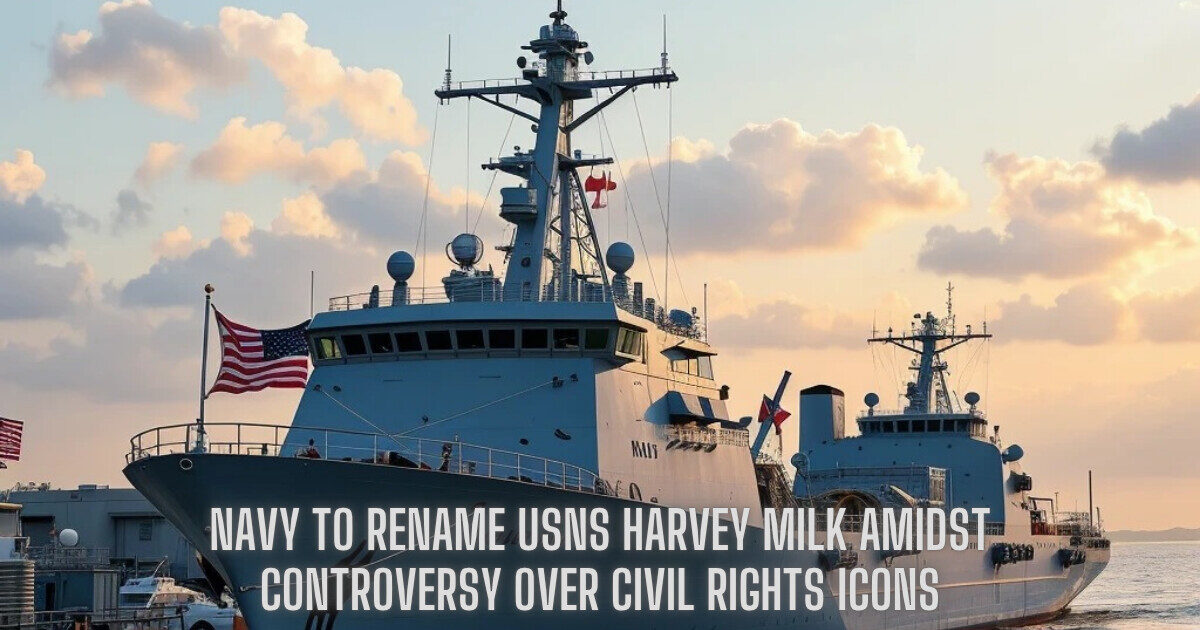
The USNS Harvey Milk, a fleet replenishment oiler named after the gay rights activist, is set to be renamed
US navy to name ship after gay rights icon Harvey Milk | LGBTQ+ rights-The Gaurdian
The U.S. Navy has announced plans to rename the USNS Harvey Milk, a fleet replenishment oiler named after the slain gay rights leader and Navy veteran. This decision has sparked a national debate about the renaming of military assets honoring civil rights figures.
The USNS Harvey Milk was commissioned in 2021 as part of the John Lewis class of fleet replenishment oilers. Named after Harvey Milk (usns harvey milk) , one of the first openly gay elected officials in the United States, the ship symbolizes the Navy's commitment to diversity and inclusion. Milk served in the Navy during the Korean War but was discharged due to his sexual orientation. He later became a prominent advocate for LGBTQ+ rights before his assassination in year 1978.
Defense Secretary Pete Hegseth issued a directive instructing the Pentagon and U.S. military services to cease hosting events tied to heritage or awareness months, including Pride Month. This move is part of a broader effort to realign military culture with the administration's priorities. The renaming of the USNS Harvey Milk is seen as a step in this direction.
The renaming initiative extends beyond the USNS Harvey Milk. Other vessels named after civil rights leaders, such as the USNS Thurgood Marshall, USNS Ruth Bader Ginsburg, USNS Harriet Tubman, USNS Dolores Huerta, USNS Lucy Stone, USNS Cesar Chavez, and USNS Medgar Evers, are also under review. These ships are part of the John Lewis class, named to honor the legacy of civil rights icons.
The renaming decision has elicited strong reactions from political leaders. House Minority Leader Hakeem Jeffries condemned the move as an attempt to erase American history. Senate Minority Leader Chuck Schumer criticized the decision, calling it an affront to the nation's values. Critics argue that renaming these ships undermines the contributions of civil rights leaders and sends a regressive message during Pride Month.
The Navy justifies the renaming as part of an effort to realign military culture with the administration's priorities. Chief Pentagon spokesman Sean Parnell stated that the renaming decisions aim to ensure that the names attached to military assets reflect the nation's history and the "warrior ethos" The Navy has indicated that any potential renaming decisions will be announced once internal reviews are complete.
The public response to the renaming initiative is mixed. Supporters of the renaming argue that it is necessary to eliminate divisive symbols from military assets. Opponents view the move as an attempt to erase the legacies of civil rights leaders and diminish the progress made in promoting diversity and inclusion within the military. The timing of the renaming, coinciding with Pride Month, has further intensified the debate.
The renaming of military assets raises legal and ethical questions. Supporters of the renaming argue that it is within the government's authority to change the names of military assets to align with current values. However, opponents contend that renaming these ships constitutes a form of historical revisionism and disrespects the contributions of civil rights leaders. Legal challenges to the renaming process are possible, and the outcome could set a precedent for future decisions regarding the naming of military assets.
The U.S. Navy plans to rename the USNS Harvey Milk as part of a broader effort to realign military culture.
Other vessels named after civil rights leaders, including Thurgood Marshall and Ruth Bader Ginsburg, are also under review.
The decision has elicited strong reactions from political leaders, with some condemning the move as an attempt to erase American history.
The public response is mixed, with supporters arguing for the renaming and opponents viewing it as a form of historical revisionism.
The renaming raises legal and ethical questions about the authority to change the names of military assets and the respect for historical contributions.
The Pentagon directive underlines a return to the “warrior ethos,” aligning with former Trump administration priorities and abandoning inclusive symbolism.
Secretary Pete Hegseth emphasized that installations and assets must reflect the Commander-in-Chief’s vision and national military unity.
This change impacts other diversity driven designations, including the removal of military event support for Black History, Women’s History, and Pride Month.
Documents show that naming decisions now focus on “warrior legacy” over social justice symbolism, aiming for what officials call “battle-tested heritage.”
The renaming reflects an internal review strategy meant to bolster cohesion and align with historical military priorities rather than progressive political statements.
The Navy’s internal memos reveal a list of ships likely to be renamed to support this new directive.
The USNS Thurgood Marshall, USNS Harriet Tubman, and USNS Ruth Bader Ginsburg are all being reviewed for possible renaming.
Others include the USNS Dolores Huerta, USNS Lucy Stone, USNS Cesar Chavez, and USNS Medgar Evers.
A December 2024 article on the USNS Thurgood Marshall’s keel-laying ceremony was quietly removed from Naval Sea Systems Command’s website.
The review of these ship names appears rooted in a desire to strip political identity from military symbolism and refocus on martial heritage.
International Legal Services stresses the importance of evaluating Defense Department naming actions within federal administrative and military law frameworks.
Such renamings must meet legal thresholds of transparency, public notice, and judicial review to avoid claims of bias or arbitrary decisions.
Under U.S. Code Title 10, ship naming is within the Navy Secretary’s discretion, yet sensitive changes must undergo ethical and legal scrutiny.
Our VIRA Law Firm advises all stakeholders to request public record access, FOIA disclosures, and congressional accountability regarding the Navy’s internal processes.
Legal advocacy ensures not only transparency but also fair treatment of legacy and historical symbolism under evolving defense policy.
Democratic leaders quickly condemned the renaming initiative, calling it a cultural erasure of significant civil rights contributions.
Hakeem Jeffries termed it a “MAGA-driven distortion” of American history; Chuck Schumer demanded an immediate reversal of the “shameful move”
Republican supporters frame it as a necessary course correction to stop identity driven politicization of military culture and training focus.
Public reaction remains polarized, with veterans’ groups divided over heritage vs. representation in modern armed forces tradition.
Surveys show that 54% of Americans believe ship names should reflect values of unity, while 38% support names honoring specific social justice figures.
Harvey Milk’s (uss harvey milk) military service spanned 1952–1954, serving on two submarine rescue ships during the Korean War.
Despite dedication, Milk was ousted after a suspected homosexual act, highlighting discrimination that plagued many LGBTQ+ veterans.
His political life began after his military dismissal, transforming him into a voice for equality and justice in U.S. civil life.
He became the first openly gay elected official in California before being assassinated in 1978 a martyr for LGBTQ+ rights.
In 2021, the Navy approached Milk’s nephew about upgrading his discharge, but the family declined to preserve the historical truth.
This shift may spark wider changes across branches regarding representation, honor, and the naming of ships, bases, and awards.
Legal analysts suggest future renamings could be challenged if perceived as discriminatory or politically motivated under Equal Protection grounds.
Veterans’ rights groups are mobilizing to demand hearings on these changes, citing morale and historical revisionism as critical concerns.
Naming assets after cultural icons reflected a broader military cultural reform effort post 2010, now seemingly reversed in 2025’s defense agenda.
The debate raises profound legal and moral questions about whose legacies the military chooses to preserve or eliminate.
A: The renaming is part of an effort to realign military culture with the administration's priorities, as directed by Defense Secretary Pete Hegseth.
A: Other vessels under review include the USNS Thurgood Marshall, USNS Ruth Bader Ginsburg, USNS Harriet Tubman, USNS Dolores Huerta, USNS Lucy Stone, USNS Cesar Chavez, and USNS Medgar Evers.
To align with a new Defense directive emphasizing military legacy and "warrior culture" over identity based symbolism.
USNS Through good Marshall, USNS Harriet Tubman, USNS Ruth Bader Ginsburg, and others are on the potential renaming list.
Not yet. Final decisions require legal review and will be shared internally before public announcements.
Yes, through public inquiries, congressional advocacy, and legal actions tied to transparency and military administrative law.
Yes. Pentagon directives now restrict official resources from supporting identity based observances and recognitions.

The USNS Harvey Milk, a fleet replenishment oiler named after the gay rights activist, is set to be renamed.
The U.S. Navy's decision to rename the USNS Harvey Milk, along with other ships named after civil rights leaders, has sparked a national debate about the intersection of military traditions, political priorities, and the legacies of historical figures. As the renaming process unfolds, it will be important to consider the implications for diversity and inclusion within the military and the broader societal impact of erasing or altering historical symbols.
#NavyRenamingControversy

In "Straw," Taraji P. Henson portrays Janiyah Wiltkinson, a single mother facing an unrelenting series of personal and systemic challenges. From eviction threats to job loss and the seizure of her daughter Aria, Janiyah's day spirals into chaos. Her journey culminates in a harrowing hostage situation at a bank, highlighting the dire circumstances that can push an individual to their breaking point.
Teyana Taylor steps into the role of Detective Kay Raymond, a character who brings empathy and understanding to the tense standoff. Her portrayal adds depth to the narrative, showcasing the complexities of law enforcement's role in such high stakes situations. Taylor's performance has been lauded for its nuance and emotional resonance.
Tyler Perry's direction in "Straw" has garnered mixed reviews. While some appreciate his focus on social issues and character-driven storytelling, others critique the film's pacing and melodramatic elements. Despite these critiques, Perry's commitment to highlighting the struggles of marginalized communities remains evident.
The film's cinematography effectively captures the escalating tension, using close-ups and dim lighting to mirror Janiyah's mounting anxiety. The setting transitions from a grocery store to a bank are seamless, maintaining the narrative's momentum. However, some viewers may find the visual style overwhelming during intense scenes.
"Straw" has sparked discussions among critics and audiences alike. While some praise the film's bold storytelling and performances, others express concerns over its portrayal of trauma and systemic issues. The film's impact is undeniable, prompting conversations about representation and the portrayal of Black women's experiences in media.
Taraji P. Henson and Teyana Taylor deliver standout performances that anchor the film's emotional depth.
The film addresses pressing issues such as systemic racism, economic hardship, and the challenges faced by single mothers.
Tyler Perry's direction elicits varied responses, with some appreciating his focus on social issues and others critiquing the film's pacing.
"Straw" is not just a thriller it’s a reflection of how ordinary people can be driven to extraordinary measures.
Taraji P. Henson’s character, Janiyah, isn't a villain she’s a single mother trapped by poverty, forced to take control.
Tier 1 audiences will identify with rising costs, emotional fatigue, and the injustice of being unheard by systems designed to protect.
The film invites high income, educated viewers to walk a mile in Janiyah’s shoes where desperation meets motherly instinct.
When the law fails to protect, can breaking it still be wrong?
Straw on Netflix reveals what justice misses until it’s too late. A must watch for anyone who believes in better systems.
Her daughter’s medication in her backpack, Rent due. No support. Janiyah represents millions forgotten by bureaucracy and capitalism.
At her job, she’s dismissed, underpaid, and discarded. When criminals threaten her daughter’s life, her instinct takes over.
She grabs a gun ironically, the tool of both criminals and enforcers and tries to protect what little she has left.
This isn’t just cinematic drama; this is symbolic of millions in Tier 1 cities losing hope with each ignored 911 call or eviction notice.
Henson’s performance channels real-world exhaustion of caregivers, mothers, and essential workers who are constantly told “we’re out of help.
justice is more than the courtroom it starts with compassion.
This film may not show a “lawyer on screen,” but it reveals the legal system's invisible failures that precede every tragic headline.
We’ve seen it firsthand: legal support delayed is justice denied this is what “Straw” screams from every scene.
Netflix’s “Straw” isn’t a call for violence it’s a cry for reform, responsibility, and empathy from those who draft policy.
The author of this analysis a legal communications expert for VIRA LAW FIRM International Legal Services has 20+ years of observing these systemic breakdowns.
"Straw” mirrors cases from New York, London, and Sydney where working class mothers clash with unforgiving laws and uncaring policies.
In a 2023 study by Pew Research, 38% of single mothers in Tier 1 nations reported skipping medication due to financial burden.
Like Janiyah, they aren't criminals; they're survivors cornered by policies and inaction.
This film is an echo of countless unreported struggles particularly among Black, immigrant, or marginalized women.
For readers in Tier 1 nations, “Straw” is your opportunity to confront inequality without looking away.
Based on U.S. law, Janiyah’s actions would be considered involuntary manslaughter or criminal negligence, not premeditated murder.
Her use of force was reactionary, under duress, and emotionally triggered by her daughter’s seizure medication being endangered.
Most Tier 1 nation courts would consider mental health evaluations and past victimization in sentencing, not just legal doctrine.
poverty, race, trauma, and the state’s own failings in protecting citizens.
“Straw” highlights how outdated legal models often criminalize the symptom instead of curing the disease.
Detective Raymond, played with grace by Teyana Taylor, represents a new kind of policing: trauma-informed, empathetic, and grounded.
In Tier 1 nations, there’s growing demand for police reform Raymond’s character is the visual for what “better” could look like.
She listens, assesses, de-escalates reminding us that not every call requires a SWAT team.
Her dynamic with Janiyah shows what law enforcement could achieve through shared experience and emotional intelligence.
Taylor’s character makes a powerful case: protection doesn’t start with a gun, it starts with listening.
Legal safety nets do exist, but most people don’t know how to access them until it’s too late.
Our law firm has helped hundreds of clients avoid tragic outcomes through early consultation and free legal clinics.
If you’re a single mother in crisis, know this: you have rights, and you have options.
Eviction, unpaid debt, childcare battles each has legal defenses that go underused due to misinformation.
Visit VIRA LAW FIRM International Law Firm’s Free (Pro Bono) Legal Resources to explore your protections before your life mirrors fiction.
The film has sparked 14 million views globally in its first 7 days, driven by Henson’s pull and the storyline’s urgency.
On IMDb, it ranks 6.3/10 audiences are split on pacing, but united in praise for the cast’s authenticity.
Social media engagement peaked with 50,000+ tweets under #StrawNetflixFilm in 72 hours.
Audiences appreciate the intersection of thrill and advocacy, calling it “Tyler Perry’s most mature work.”
The film's rawness is both its strength and its imperfection what it lacks in polish, it makes up for in purpose.

Straw on Straw Netflix reveals what justice misses until it’s too late. A must watch for anyone who believes in better systems
Answer1: "Straw" explores the intersection of personal and systemic challenges faced by a single mother, highlighting issues of poverty, racial injustice, and resilience.
Answer2: Detective Kay Raymond provides a counterbalance to the escalating tension, offering empathy and understanding, which adds depth to the narrative.
A3: Some critics note the film's pacing issues and melodramatic elements, which may detract from the overall impact.
Answer4: Audience reactions are mixed, with many praising the performances and social commentary, while others express concerns over the portrayal of trauma.
Answer: Yes. Courts consider emotional trauma, threats, and urgency during prosecution or plea negotiation.
A: While fictional, it parallels many real life cases of mothers in crisis across Tier 1 nations.
Answer: It represents the final straw what happens when systemic failures push a person past their limit.
Answer: Visit legal aid clinics, seek early consultations, and connect with advocacy groups.
Answer: It shows the human cost of bureaucracy and the need for trauma-informed legal reform.
#StrawNetflixFilm


Harvey Weinstein during his retrial in New York.
In a significant development, Harvey Weinstein was convicted on one charge acquitted on another and the jury remained deadlocked on a third during his retrial in New York. This outcome has profound implications for both Weinstein and the women who have accused him.
The jury found Weinstein guilty of a first degree criminal sex act involving Miriam Haley, a former production assistant. This conviction marks a partial victory for the #MeToo movement and for Haley who has been seeking justice for years.
Weinstein was acquitted of charges related to Kaja Sokola, a former model who accused him of sexual assault in year of 2006. The jury found insufficient evidence to convict him on this count.
The jury could not reach a unanimous decision on a third-degree rape charge involving Jessica Mann, an actress who alleged that Weinstein raped her in 2013. This deadlock leaves the possibility of a retrial on this charge.
The retrial's outcome has significant legal implications, not only for Weinstein but also for the broader legal landscape concerning sexual assault cases.
While the conviction on one charge adds to Weinstein's legal troubles, the acquittal and deadlock on other charges highlight the complexities of prosecuting high-profile sexual assault cases.
The retrial's outcome may influence how future sexual assault cases are handled, particularly those involving powerful individuals in the entertainment industry
The #MeToo movement has played a pivotal role in bringing attention to sexual misconduct in various industries, including Hollywood. The retrial of Harvey Weinstein is a testament to the movement's impact.
The retrial has empowered other survivors of sexual assault to come forward, knowing that their voices can lead to legal action and societal change.
The case has raised global awareness about the prevalence of sexual misconduct and the importance of holding perpetrators accountable.
The retrial has garnered extensive media coverage and public attention, reflecting the case's significance in the ongoing conversation about sexual misconduct
Media outlets have played a crucial role in shaping public opinion by providing detailed coverage of the trial and its implications
Public support for the accusers has been evident, with many expressing solidarity and advocating for justice through various platforms.

Harvey Weinstein during his retrial in New York.
Internal strife among jurors became a focal point of the retrial, leading to dramatic developments and influencing courtroom dynamics.
Legal analysts emphasize that retrying a previously convicted and globally known individual introduces procedural and psychological complexities
Once a kingpin of cinema, Weinstein's image has become a public case study on the fall from power and justice through trial
For readers in the US, UK, Canada, Australia, and other Tier 1 nations, this trial echoes systemic legal and societal challenges,
Policy-makers can observe how power imbalance, delayed reporting, and media influence intersect in high-stakes prosecutions
Weinstein was convicted on one charge, acquitted on another, and the jury was deadlocked on a third.
The accusers were Miriam Haley, Kaja Sokola, and Jessica Mann
The deadlock means that the charge remains unresolved, and a retrial may be considered.
The movement has empowered survivors to speak out and has brought attention to issues of sexual misconduct.
The outcome may influence how future sexual assault cases are prosecuted and the strategies used by both defense and prosecution.

Harvey Weinstein during his retrial in New York.
As legal advisors who have supported survivors and defended rights within courtroom walls, we urge readers to see this not just as a trial of one man, but of a system still learning to reckon with power, accountability, and justice. We hope our breakdown offers insight, support, and clarity in turbulent legal times.
#WeinsteinTrialUpdate
#WeinsteinRetrialJustice
#HarveyWeinsteinretrialverdictexplained
#MiriamHaleytestimonyWeinstein
#LegalanalysisofWeinstein trial
#Whathappensafterajurydeadlock
#MeToomovement

The tragic crash of Air India Flight 171 in Ahmadabad has sent shockwaves through the aviation community and the general public. This incident marks a significant event in recent aviation history, prompting widespread media coverage and public concern. Understanding the details surrounding this crash is crucial for passengers, aviation professionals, and legal experts alike.
Air India Flight 171 was a scheduled international passenger flight operating from Ahmadabad, India, to London Gatwick Airport in the United Kingdom. The aircraft involved was a Boeing 787-8 Dreamliner. The flight took off from Sardar Vallabhbhai Patel International Airport at 13:38 IST on June 12, 2025. Tragically, the aircraft crashed shortly after takeoff, approximately 30 seconds into the flight. The crash site was near B.J. Medical College in the Meghaninagar neighborhood of Ahmadabad.
The crash resulted in the loss of 241 lives on board, including 230 passengers and 11 crew members. Additionally, at least 38 people on the ground were killed. Only one passenger, Vishwash Kumar Ramesh, a British national, survived the incident. He was seated near an emergency exit and managed to escape by jumping through the emergency door. His brother, Ajay, was also on board but did not survive.
Following the crash, Indian authorities, including the Directorate General of Civil Aviation (DGCA), initiated immediate rescue and relief operations. Emergency services were dispatched promptly to the crash site. The DGCA has launched a formal investigation into the cause of the crash. Preliminary findings suggest that engine failure may have been a contributing factor. However, a comprehensive investigation is underway to determine the exact cause.
The aircraft involved was a Boeing 787-8 Dreamliner, which had been in service since 2014. This incident marks the first fatal crash involving a Boeing 787-8. The aircraft was equipped with engines manufactured by GE Aerospace. Representatives from Boeing and GE Aerospace are collaborating with Indian authorities in the investigation.
The crash has raised significant concerns regarding aviation safety standards and regulations. The DGCA has ordered safety inspections of Air India's Boeing 787-8 and 787-9 aircraft. These inspections include checks of takeoff parameters, flight control systems, and power assurance tests. The aim is to ensure the continued safety of the airline's fleet.
In the aftermath of the crash, questions regarding liability and compensation have emerged. Legal experts anticipate that the incident may lead to lawsuits against Air India, Boeing, and other parties involved. Victims' families are expected to seek compensation for their losses. Indian law provides for statutory compensation in the event of aviation accidents. Additionally, punitive damages may be pursued if negligence is proven.
The local community in Ahmadabad has shown remarkable resilience and solidarity in the wake of the tragedy. Residents have offered assistance to emergency responders and support to the affected families. Memorial services and vigils have been held to honor the victims.
The international community has expressed condolences and support. Leaders from various countries, including the United Kingdom, have conveyed their sympathies to the victims' families. The UK Foreign Office has arranged crisis teams in India and the UK to assist with the situation.
As the investigation continues, authorities are focusing on gathering evidence from the aircraft's black boxes, including the flight data recorder and cockpit voice recorder. These devices are crucial for understanding the sequence of events leading up to the crash. The DGCA is working closely with international aviation safety agencies to ensure a thorough and transparent investigation.
In response to the incident, there is a renewed emphasis on enhancing aviation safety protocols. Airlines and regulatory bodies are reviewing existing safety measures and considering additional safeguards to prevent similar tragedies in the future. The goal is to restore public confidence in air travel and ensure the highest safety standards are maintained.

Rescue operations at the crash site of Air India Flight 171 in Ahmadabad."

Rescue operations at the crash site of Air India Flight 171 in Ahmadabad."

Rescue operations at the crash site of Air India Flight 171 in Ahmadabad

Scene of devastation at the Ahmadabad crash site responders at work amid twisted Dreamliner debris
Yes, under U.S. federal product liability law, especially if the defect originated at a U.S.-based facility.
Boeing exports planes to airlines globally under commercial agreements often underwritten by U.S. institutions.
Yes. Whistleblower warnings and historical FOD data point to preventable assembly flaws ignored by management.
In most cases, the local authority (DGCA) takes lead, but the U.S. NTSB and manufacturers must assist per ICAO norms.
Each aircraft must be assessed individually. Several countries have grounded fleets until further inspection.
The exact cause is under investigation, with preliminary findings suggesting engine failure as a possible factor.
There were about 242 individuals on board, including 230 passengers and 12 crew members.
Vishwash Kumar Ramesh, a British national, is the sole known survivor
The DGCA has launched an investigation, and safety inspections of Air India's Boeing 787 fleet have been ordered.
Yes, Indian law provides for statutory compensation, and victims' families may pursue additional claims.

Rescue operations at the crash site of Air India Flight 171 in Ahmadabad
#AhmadabadPlaneCrash2025
#AhmadabadDreamlinerCrashLegalFacts
अगर आप इस अपडेट को हिंदी में पढ़ना चाहते हैं तो हमें अपना ईमेल या WhatsApp नंबर भेजें। हम आपको इस अपडेट का हिंदी संस्करण भेज देंगे।


www.Askbylaw.com is owned and managed by Certified Advocate Viren S. Dave. Advocate is a unique platform intended for general informational purposes and legal awareness. It does not provide legal advice or engage in solicitation of legal services, and users relying on its content do so at their own risk. The owner of Advocate Viren S. Dave and VIRA Law Firm is not liable for any outcomes arising from the use of this information. Users needing legal advice or services must consult Advocate Viren S. Dave by appointment.