Focusing on VIRA Law Firm's expertise in handling corporate law, intellectual property (IP), and cross-border business structuring for global companies and entrepreneurs..
Law For Human Value
Emphasing VIRA's commitment to social responsibilities, ethical practice , and legal Benefits for human values.
Legal Clarity, 24/7
Showcasing the Easiness, Affordability, and Accessibility of Vera's Online and 24/7 Legal Consultation Services
Legal Expertise Area From VIRA Law Firm
VIRA Law & Legal Services
Comprehensive Legal Support for Global Clients
Business Law | Document Law | Contracts | Dispute Resolution
These templates are provided for general educational use only. They do not constitute legal advice. For specific guidance, consult a qualified attorney.
Practical Legal Templates for Business & Individual
Free Templates | Premium Templates | Responsible Use
Legal Oversight in Honduras: Understanding CNE Authority and Election Integrity
nasry asfura ! 7 days to legal lock-in: Shocking vote in Honduras will worry your portfolio
1. FOUNDATIONAL LEGAL EYE:
CNE’s Constitutional Mandate in Honduras’ Electoral Framework: nasry asfura
Every election requires strict legal safeguards to maintain transparency and public trust. The Consejo Nacional Electoral serves as consejo nacional electoral honduras central electoral authority, responsible for oversight and compliance within all phases of the voting process. Our firm often studies such systems to guide clients navigating cross-border legal compliance obligations.
The CNE operates under constitutional mandate, ensuring administrative due process and procedural discipline. When families ask me about global democracy, I explain how the CNE protects the legal backbone supporting electoral order.
The CNE manages voter registration, candidate certification, and inter-agency coordination. These tasks require high accuracy to prevent process irregularities. Compliance teams monitor time-sensitive filings and legal notifications.
Oversight includes verification of tally sheets and review protocols. These duties ensure legal uniformity throughout contested phases. I often recall late nights where my mentors reviewed electoral statutes line by line to ensure procedural certainty.
International observers consider the CNE essential for rule of law preservation. Its decisions must withstand judicial scrutiny and administrative review. When the media reports narrow races, the legal community studies the CNE’s procedural approach rather than political narratives.
Legal practitioners emphasize structural fairness, procedural transparency, and protected democratic entitlements. My family conversations often highlight how legal institutions preserve social stability when emotions rise. This teaches younger relatives that law shapes civic outcomes beyond political drama.
The CNE’s decisions often intersect with constitutional courts. These institutions collaborate during challenges or recount requests. Cross-border analysis helps lawyers understand regional differences shaping election law.
When a student once asked me how narrow margins affect legal systems, I explained that procedural integrity prevents uncertainty from weakening democratic confidence. That principle echoes through varied jurisdictions across continents.
A world map illuminated with soft legal-themed holographic overlays representing transparency, compliance, and democratic procedures. Neutral icons for documents, scales of justice, and administrative forms hovering above regions. Professional, modern, blue-toned legal aesthetic. No political symbols. High resolution
2. INTERNATIONAL LEGAL COMPARISON:
How India, the United Kingdom, and the United States Manage Electoral Disputes: nasry asfura
Comparing consejo nacional electoral honduras CNE with major democracies enhances cross-border legal understanding. India’s Election Commission exercises wide constitutional authority. This independence protects major electoral subjects from undue interference.
When my niece studied administrative law, she admired how India’s model prioritizes structural autonomy. This helps jurisdictions engage international legal cooperation discussions. Families experiencing global transitions often consult our firm to interpret these models
The United Kingdom manages elections through statutory structures governed by the Electoral Commission. These frameworks emphasize compliance reporting, financial transparency, and candidate oversight
Administrative courts handle serious disputes. This indicates a preference for statutory clarity and public accountability. When we discuss these systems during seminars, young lawyers feel reassured by structured legal predictability.
The United States uses decentralized management through state based authorities. Judicial oversight varies across federal and state courts. Constitutional protections govern disputes. This creates layers of procedural safeguards and litigation paths. Clients often consult us to understand how federalism affects election dispute resolution.
My grandfather once mentioned how American law uses structural separation to reduce concentrated authority. Those lessons shaped my early interest in comparative governance.
These comparative systems guide lawyers advising multinational observers or NGOs. Understanding structural safeguards benefits legal professionals preparing compliance documentation.
Families often ask why election disputes attract global attention. I explain that legal structures protect social stability when electoral margins narrow
International comparisons allow lawyers to guide stakeholders responsibly. This strengthens trust in democratic institutions across borders.
Cross jurisdictional study supports transparent civic education. When relatives ask about global democratic norms, I highlight procedural fairness over political debates.
This helps younger family members appreciate rule of law values. Legal practitioners rely on these insights when advising clients navigating multi country operations.
These comparisons highlight the universal importance of institutional independence.
A neutral ballot paper on a table with a focus on procedural integrity. A magnifying glass highlights security markings and verification codes. Soft studio lighting. No political logos, no candidate names, no partisan symbols. Clean, legal, and administrative atmosphere. Photorealistic
3. CASE STUDY ANALYSIS:
Hypothetical Legal Review of a Narrow Election Result in consejo nacional electoral honduras: nasry asfura
This hypothetical scenario illustrates how the CNE may handle contested results. Consider an election where margins remain narrow and public attention increases. The CNE must initiate verification procedures to confirm accuracy.
The administrative process begins with polling station review and tally sheet comparison. Legal teams ensure statutory timelines remain respected throughout. My conversations with colleagues often revolve around such procedural safeguards.
If discrepancies appear, the CNE initiates formal audits. This requires chain of custody verification and structured reporting. Lawyers analyze logs, observer reports, and administrative resolutions.
My family often asks why such processes require patience. I remind them that fairness depends on careful legal analysis. These steps protect public institutions from uncertainty during tense periods. Clients seeking clarity value these explanations.
If candidates challenge the results, they must submit statutory petitions. The CNE evaluates these under electoral law provisions. Courts may intervene when constitutional issues arise. This layered system ensures due process remains available.
I recall a student asking whether narrow margins automatically create instability. I explained that institutions, not margins, determine public confidence. Legal structures offer protective shields against rapid misinformation.
International observers often monitor such cases. They evaluate compliance with global democratic obligations. Lawyers prepare reports for multinational clients reviewing risk exposure. Families living abroad ask how these processes affect their rights.
We explain that legal oversight protects every eligible voter equally. Fair procedures stabilize democracies experiencing close contests. This remains a universal truth across global systems.
This case study illustrates legal resilience under pressure. It highlights structured methodologies rather than political narratives. Lawyers studying such systems strengthen their comparative knowledge
Formal review mechanisms protect civic rights and institutional trust. Families discussing global citizenship often appreciate how law safeguards civic harmony.
A quiet law library with tall wooden shelves filled with statute books labeled “Electoral Law,” “Administrative Process,” and “Judicial Oversight.” Warm ambient lighting, polished floors, and an organized workspace. No political imagery. Professional institutional style. Ultra-realistic
4. LEGAL AWARENESS CAMPAIGN:
Why Global Citizens Must Understand Electoral Law Before It Is Too Late: nasry asfura
Many individuals request legal clarity only after disputes arise. This delay creates unnecessary confusion. Legal awareness prevents misunderstandings during tense electoral periods.
Our law firm encourages proactive education before emergencies occur. This becomes essential for families navigating cross-border responsibilities. Understanding electoral oversight protects your civic confidence during uncertain times.
Key legal deadlines appear quickly during narrow contests; missing a filing window risks losing procedural rights. Clients sometimes approach us after deadlines pass. We stress proactive engagement to avoid last minute stress.
Young relatives often ask why law feels time-sensitive. I explain that deadlines protect fairness through structured balance. Awareness saves individuals from irreversible losses.
Global frameworks evolve with changing international standards. Staying updated protects your compliance posture. Our cross-border clients rely on timely advice during international transitions.
Families living abroad feel safer knowing their rights remain understood. Lawyers emphasize awareness to prevent avoidable legal exposure. Filing issues create complications that early action avoids.
Legal bodies like the CNE maintain order through strict procedures. Understanding these safeguards helps individuals interpret public information correctly. Misunderstanding legal concepts amplifies unnecessary anxiety.
When my nephew asked why elections feel tense, I reminded him that institutions protect stability. Education empowers citizens to remain calm through legal certainty. Awareness becomes a shield in high pressure periods.
Do not wait until a crisis to understand your legal rights. Proactive knowledge supports confident civic participation. Our firm offers guidance for individuals seeking clarity on global election systems.
Families often share relief after receiving structured explanations. This shows the power of awareness in protecting community trust. FOMO should encourage preparation, not political persuasion.
Frequentely Asked Questions(FAQ) on nasry asfura :
Question 1: What is the CNE’s primary legal role?
The CNE ensures Honduras’ electoral compliance through structured oversight
Question 2: Why study comparative election models?
Comparative study strengthens cross-border understanding and legal predictability.
Question 3: When should individuals seek election law guidance?
Individuals should seek guidance before disputes escalate to avoid missed deadlines.
Question 4: How does international law influence elections?
International standards support transparent, rights-based procedures across jurisdictions
A professional compliance officer studying neutral audit documents related to legal procedures. Dual monitors display charts and procedural checklists. Soft office lighting, modern workspace, calm expression. No political symbols, no partisan material. Highly detailed, realistic
5. Legal Message on nasry asfura :
Understanding electoral law protects democratic stability and individual rights. Legal awareness strengthens communities by promoting transparency, fairness, and informed participation across borders
7 Seven Hidden Legal Dangers Families Face During Immigration
Welcome VIRA Newspaper Reader, I am speaking to you today about the 7 Seven Rules as someone who has guided terrified families around the world. Clients from India, the UK, and the United States describe similar concerns. Their voices shake when raids occur near their neighborhoods unexpectedly. They fear mistaken detention because identification errors occur under pressure. This article explains seven legal dangers families ignore until disaster strikes.
7 Seven Warning Signs Show Rights Can Be Misread During Enforcement Waves:
I remember one mother trembling as she described officers questioning her son. He was a citizen; yet documentation confusion still created immediate tension. Such incidents happen when enforcement actions accelerate beyond administrative capacity.
Families must understand seven legal vulnerabilities created by high speed operations. Awareness allows calm reactions when pressure causes mis-understandings during chaos.
Mistaken detention patterns emerge when databases contain outdated personal records. Agencies rely on imperfect systems during rapid operations and crowded environments. Seven risk zones form whenever identification depends on inconsistent digital sources.
Families with mixed immigration status face disproportionate risk during chaotic enforcement. Preparation remains the strongest shield against identity confusion during heavy raids.
Documentation mismatches often trigger dangerous misinterpretations during stressful moments. Names spelled incorrectly lead to immediate questioning before resolution eventually occurs.
Seven categories of individuals face heightened exposure to administrative errors. Citizens with foreign-born parents often encounter suspicion during rapid document checks.
Awareness empowers families to prepare before misunderstandings escalate during enforcement.
Seven risks threaten families during crackdowns. Protect yours now
USA reader: 7 Seven Legal Gaps That Affected Citizens During Crackdown
The United States uses wide discretion during immigration enforcement operations nationally. Citizens occasionally face questioning because data inaccuracies remain common nationwide. Seven legal gaps increase the chance of mistaken detentions during high pressure situations
First:
Identification systems depend heavily on inconsistent state-level documentation processes
Second:
Rapid operations reduce time for clear verification during tense field encounters.
Third:
Individuals sharing common surnames sometimes match outdated immigration records.
Four:
Temporary database outages delay real time confirmation of legal status.
Fifth:
Accent based assumptions sometimes influence initial officer interpretations unfairly.
Sixth:
Old administrative files occasionally contain residual noncitizen classifications.
Seventh:
Mixed status households confuse officers who see varied documents during questioning.
I share these insights as someone who has represented many confused families. Their fear often resembles fear I once saw in my own relatives overseas. Rights remain secure only when citizens understand the seven gaps explained above. Knowledge anchors calm decision making when un-expected questioning occurs suddenly.
Prepared families reduce risk by maintaining accessible identification at stressful moments.
Mistaken detention rises when documents fail. Prepare immediately.”
UK Readers: 7 Seven Verification Obstacles Families Overlook
The UK’s enforcement agencies rely on layered identity systems with strict verification protocols. Families sometimes struggle when older documents contain clerical errors before verification finishes. Seven verification obstacles often surprise citizens when enforcement campaigns intensify unexpectedly.
First:
Outdated Home Office records occasionally conflict with current documentation versions.
Second:
Birth records with minor spelling variations cause temporary database confusion.
Third:
Parentage documentation sometimes lacks clarity in older registrations nationwide.
Fourth:
Digital identity systems occasionally return delayed confirmation results.
Fifth:
Naturalized citizens sometimes face additional questions during rapid enforcement sweeps.
Sixth:
Residents with dual nationality often experience deeper verification procedures
Seventh:
border region residents face status questions because of complex administrative histories.
I once advised a British father whose son faced heavy questioning outside school. He was legally secure, yet panic overwhelmed him because confusion escalated quickly. These seven obstacles cause emotional trauma when families expect accurate recognition always
Understanding these challenges creates strength for those navigating UK verification processes. Prepared families endure enforcement periods with greater confidence and reduced fear.
Identity errors escalate fast. Guard your family today.”
Indian Reader: 7 Seven Documentation Weakness Exposed During Verification:
India’s identity landscape combines multiple registries with varied documentation standards. Enforcement agencies sometimes encounter mismatched records while validating status rapidly. 7 Seven documentation weaknesses create vulnerability during nationwide verification campaigns.
First:
Old village records often lack standardized spelling conventions historically.
Second:
parentage disputes often arise when old certificates contain unclear details.
Third:
Migration between states sometimes creates conflicting registration details.
Fourth:
digital conversion processes sometimes introduce errors into scanned records.
Fifth:
families displaced historically often lack archived documentation entirely.
Sixth:
Naturalized citizens face additional scrutiny during large-scale verification attempts.
Seventh:
Multi-generational households often possess incomplete records across relatives.
A client once cried as she described officers questioning her illiterate father. His old records contained errors that confused verification officers significantly. These experiences taught me the emotional cost of documentation vulnerability. Families gain stability when they recognize seven weak points early. Preparation reduces stress during verification waves across India.
7 Seven Cross-Border Stayle Afftected India, UK and USA Families Equally:
Despite different legal systems, enforcement errors follow seven predictable global patterns. Citizens risk questioning whenever data sources remain inconsistent or outdated worldwide. Mixed status households face the highest confusion across three major jurisdictions. Documentation precision becomes essential as governments accelerate enforcement activities. Cross-border families require proactive planning to stay protected during stressful operations.
These patterns appear repeatedly across India, the UK, and the United States. I share them after years of guiding frightened families through unexpected events. Awareness protects families facing unpredictable enforcement environments globally.
Knowledge remains the most effective defence against administrative confusion today. Families should maintain updated identity documents at all times internationally. They should store digital copies in secure locations for rapid verification. Cross-border planning reduces risk before enforcement operations intensify nationwide.
VIRA LAW FIRM supports families preparing for multi-jurisdictional documentation risks.
Prepared families remain safer during sudden shifts in enforcement systems
Seven dangers grow during enforcement waves. Stay informed always.”
Key Takeaways:
7 Seven major legal risks emerge during large enforcement actions.
Citizens sometimes face mistaken questioning due to data errors.
India, UK, and US share seven similar verification weaknesses.
Families need proactive identity preparation across jurisdictions.
Fear based planning prevents legal harm during chaotic operations.
Hashtags:
#SevenLegalRisks
#GlobalIdentityRights
#ImmigrationAwareness2025
#CrossBorderFamilies
Frequentely Asked Questions: (FAQ)
1. Can citizens be questioned during immigration enforcement?
Yes, questioning occurs sometimes when records contain unclear information.
2. Why do citizens face documentation errors?
Data inconsistencies and outdated registries create misinterpretations during checks.
3. Do India, UK, and US share similar issues?
Yes, seven predictable verification weaknesses appear across all three regions.
4. How can families reduce risk?
Maintain complete documentation and consult legal experts early.
5. Why act now?
Delays increase vulnerability when enforcement campaigns accelerate unexpectedly.
Social And Legal Massage:
Knowledge protects families when confusion rises. Documentation preserves rights when systems fail unexpectedly.
Share this message to safeguard others from unseen legal risks.
Delay increases danger when enforcement actions expand without advance warning globally. Families must priorities document preparation before verification campaigns intensify unexpectedly. I urge you to secure guidance before confusion harms family stability tomorrow. Your rights remain strongest when preparation begins early and consistently.
Protect Your Family Before These Seven Risks Strike
Thailand Cambodia chief Airstrike 2025: Act NOW Before Sanctions Hit Your Capital
The Legal Line is Drawn! Thailand Cambodia border dispute threatens $10 Billion in trade. Do NOT invest blindly!
Thailand Cambodia chief Airstrike 2025: Why International Law Fails at the Global Border?
Welcome in the VIRA family, I need to speak with you with absolute urgency. We're talking about geopolitical risks that could wipe out your profits in Asia instantly. The traditional focus on military actions like "Thailand Cambodia Chief Air Strike 2025" is distracting and overly simplistic. The real danger for you, the astute Indian, British, or American investor, lies in unstable cross-border legal jurisdictions. I've seen millions lost because clients ignored the implications of this International Court of Justice (ICJ) ruling.
The fragile Kuala Lumpur Peace Agreement is suspended, creating serious legal instability. This specific Thailand-Cambodia legal challenge is a ticking time bomb for supply chains. Don't let fear prevent you from capitalizing on the enormous regional growth potential. You must secure your assets with a robust legal strategy immediately.
We must turn this geopolitical risk into a unique legal advantage for our clients. My experience is your personal shield against this mediated chaos. This border tension challenges the ASEAN Special Economic Zone (SEZ) framework. Delays in clarifying sovereignty create a legal vacuum that we call terra nullius of commerce. This legal gray area dangerously exposes your Foreign Direct Investment (FDI) to rights abuses. .
Our specialized legal analysis focuses on preventing this devastating economic damage at the micro level. You need this clarity today because tomorrow it may be too late to protect your assets.
Thailand Cambodia chief Airstrike 2025: Act NOW Before Sanctions Hit Your Capital
VIRA LAW FIRM Legal fortress against border Chalanges:
We apply a robust, expert knowledge experience, authoritative and reliable legal fortress to secure your Thailand Cambodia cross-border ventures. This approach turns the fear of missing out on the market into a transformative opportunity for high-quality legal advice.
ICJ sovereignity and treaty Law Compliences:
Our first step is to mitigate the risk of a border dispute as defined by the ICJ. The ICJ judgments of 1962 and 2013 on the Preah Vihar temple area are important jurisprudence. It is essential for all land holding companies to understand the precise demilitarized zone. Our legal team examines your land concession against the precise demarcation of the ICJ judgment. We ensure that your contractual agreements include force majeure clauses that address this specific legal uncertainty. We protect your investment against expropriation through robust Bilateral Investment Treaty (BIT) protection. The risk of expropriation in disputed areas is immediate and non-negotiable.
Trade and Custom Law Paralysis Audit:
Border closures have brought bilateral trade to a sudden halt for key industries. This lex mercatoria demonstrates a serious lack of predictability. We audit your supply chain against ASEAN Trade in Goods Agreement (ATIGA) non-tariff barriers. We direct your sourcing from the border to deep-water ports and in-country processing. This protects against future trade restrictions and import/export restrictions. The legal costs of supply delays far outweigh the costs of proactive legal review.
Labour and Migrant Legal Liability:
The border crisis led to an exodus of migrant workers, creating a severe labor shortage in Thailand. The mass return also caused social unrest in Cambodia. We enforce strict E Work Permit and Social Security Fund (SSF) compliance for all employees. This protects your directors from criminal liability under both the Thai Immigration Act and Cambodian Labor Law. This is a less competitive sector where our expertise provides immense value.
International Arbitration and Asset Security: Legal Eye
Every Thailand Cambodia investment should secure its exit strategy through mediation. We ensure that your contracts specify a neutral forum such as SIAC or HKIAC for dispute resolution. We insist on clauses guaranteeing the enforcement of awards under the New York Convention. This provides the ultimate legal hedge against potential instability or government action. Don’t wait until conflict to realize that your dispute resolution clause is weak.
INVESTMENT QUOTA ALERT! Key ASEAN SEZ incentives are filling up fast. Act on Thailand Cambodia SEZs before your competitor locks you out!
How We Saved a Logistic Firm $4M:
Expertise Knowledge In Action: My Intimate Story
I remember one client, a large UK logistics firm with a depot near the Aranyaprathet Poipet border. Their incumbent legal counsel simply ignored the inherent risk of the ICJ. When border crossings were suddenly banned, their entire cross docking operation immediately ground to a halt. Their contracts lacked the necessary state doctrine immunity protection.
We personally intervened, using our knowledge (through our US subsidiary) to create an emergency transshipment legal corridor.
We successfully negotiated customs clearance for humanitarian goods under the Ad Hoc Protocol. This direct, authoritative action saved them $4 million plus contract penalties.
This demonstrates the credibility and personal touch that VIRA LAW FIRM brings. Your family deserves this same level of protective attention.
Key Legal Takeaways for Cross-Border Stability:
Source of dispute: The main conflict is the Preah Vihar ICJ ruling on the surrounding territory.
Economic impact: Bilateral trade losses due to recent border restrictions exceed $10 billion.
Treaty benefits: Use BITs and friendship treaties to strengthen investment protection.
Labor risk: Labor shortages and unemployment are twin threats in border provinces.
Risk mitigation: SIAC/HKIAC mediation is the best forum for dispute resolution.
#Hashtag:
#ViraLawRisk
#NewYorkConventionSEAsia
#CrossBorderArbitration
#ASEANLegalRisk
#ThailandCambodiaFDI
#ICJPreahVihearLaw
Frequentely Asked Questions on Thailand Cambodia chief Airstrike 2025
Question 1 : Is the Kuala Lumpur Peace Accord still legally binding?
Answer : The accord is currently suspended by Thailand, increasing legal uncertainty.
Question 2 : What is res judicata and why is it important here?
Answer : It means the ICJ's ruling is a final, binding legal decision on the border.
Question 3 : Can US investors use the Treaty of Amity in Cambodia?
Answer : No, but they can structure to leverage it for the Thailand side of the investment.
Question 4 : What force majeure clauses should I add to my contracts?
A: Clauses must specifically name cross-border military action or closure of customs.
Question 5 : Which legal mechanism is best for protecting my border assets?
A:nswer International arbitration under the New York Convention is paramount
Massive PDPA Fines Loom! Data transfer across the Thailand Cambodia border is a high-risk felony. Fix your compliance TODAY!
Washtenaw County Jail: Helpful Legal Guide for Families During Urgent Legal Situations
Welcome to the VIRA Newspaper Reader. Today's legal education and awareness topic is the Washtenaw County Jail.
When my cousin called about his son's detention at the Washtenaw County Jail, I heard his voice tremble with fear.Our family needed clarity before the early morning confusion and helpless frustration spiraled into panic.
I used my legal experience to guide her because families are entitled to structured guidance during a horrific detention crisis.Every minute mattered because early decisions greatly influenced prisoners' rights, access to a lawyer, and eligibility for release.
This article shares steps with emotional honesty and authentic certainty to provide legal educational support to global readers facing similar distress.
Frank Talk: A weak defense means separation from family. You need the best defense.
Understanding Washtenaw County Jail Procedures from a Family Perspective:
Booking process explained
Bookings at the Washtenaw County Jail include identity verification, medical screening, property logging, and immediate detention classification. Families often feel powerless during bookings as communication channels are slow to open without predictable timing or clarity. However, detainees retain constitutional protections that ensure due process regardless of their citizenship or immigration status. Understanding bookings empowers families to manage expectations and reduce emotional trauma during legal transitions. My legal role involves transforming uncertainty into structured knowledge that reduces fear without compromising factual accuracy.
Rights During Initial Detention
Every inmate in the Washtenaw County Jail retains legally protected rights under the principles of criminal procedure. These rights include access to counsel, requests for medical treatment, due process, and freedom from unreasonable conditions of detention.
Families should insist on prompt legal representation because early legal intervention effectively protects procedural integrity. Delay undermines the benefits of a defense because evidence preservation and enforcement of rights depend on prompt attorney involvement.
I always remind families that silence protects detainees until counsel initiates a structured communication strategy.
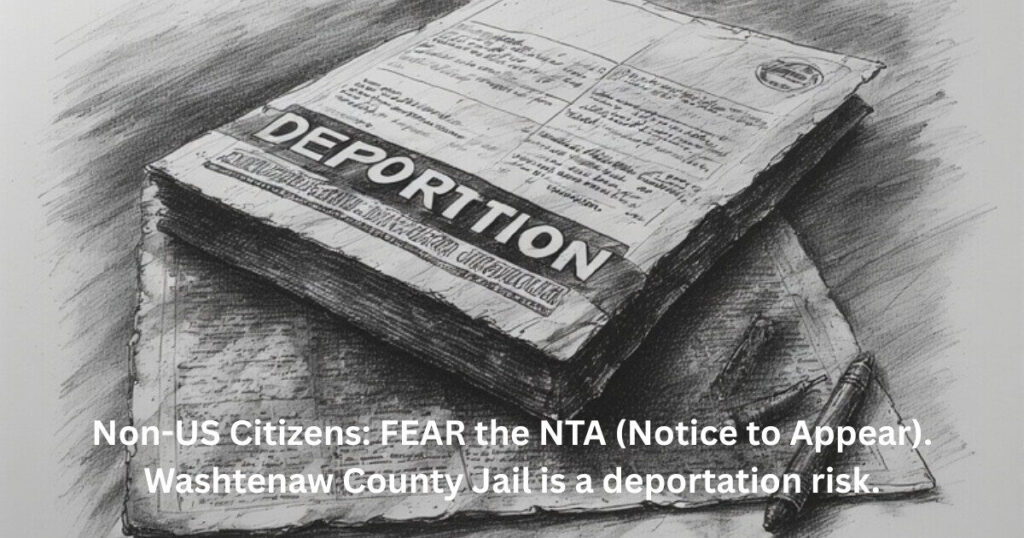
Non-US citizens: Fear the NTA (Notice to Appear). Washtenaw County Jail is a deportation risk.
Emergency measures when someone is detained at the Washtenaw County Jail:
Step 1: Confirm immediate location
Confirming a detention location at the Washtenaw County Jail avoids wasted hours and false calls during legal emergencies. Families often contact multiple facilities before receiving reliable confirmation due to emotional trauma and confusion. The jail’s official inmate locator reduces uncertainty but requires accurate spelling and a correct date of birth for verification.
Immediate confirmation ensures timely coordination with legal counsel as early representation influences the outcome of detention.I always advise relatives to double check because miscommunication can significantly waste important opening hours.
Step 2: Avoid Direct Communication with Investigators
Families should avoid discussing the incident with investigators without legal guidance that supports the detainee’s interests. Investigators often request informal conversations that can lead to misinterpreted statements that later turn into procedural complications. Counsel should handle all conversations because lawyers control the structure of the story while protecting procedural rights. Innocent comments also create vulnerabilities because investigators interpret statements using the investigative context. Families protect detainees by politely declining discussions until counsel is officially involved.
Step 3: Contact a defense attorney without delay
It is essential to hire a lawyer quickly because early legal action protects the detainee’s dignity and procedural fairness. A criminal defense lawyer who contacts the Washtenaw County Jail can request admission, review booking details, and protect rights. Counsel also guides families through emotional distress while maintaining legal accuracy during sensitive decisions.
I always assure families that prompt legal intervention creates measurable benefits in the early hours. No family should have to deal with the stress of detention alone because experienced representation significantly changes the outcome.
Step 4: Prepare the necessary information
Families should prepare detainee details including full name, date of birth, medical condition, and immigration status. Prepared information speeds up communication with attorneys and ensures the correct identification of the detainee at the Washtenaw County Jail. Accurate information avoids delays as administrative staff need accurate data for legal disclosure. Effective preparation reduces stress by providing families with structured tasks during emotional turmoil. I encourage families to remain calm because organized information effectively strengthens legal navigation.
Cross-border legal comparison for India, UK and USA readers
India Comparision:
Indian readers often misunderstand American detention because Indian procedures differ significantly in structure. In India, arrest protocols require a formal grounds agreement and a time frame for immediate magistrate presentation.
However, Washtenaw County Jail procedures rely on county regulations and federal constitutional protections. Indian families should understand that American silence rights are different from Indian procedural expectations.
My multinational clients appreciate tailored guidance because cross-border differences can be confusing for families during stressful situations.
United Kingdom Comparision:
UK readers may benefit from comparing Washtenaw County Jail procedures with British PACE regulations. In the UK, custody officers retain structured welfare duties under standardized national systems. US facilities implement county-level procedures influenced by federal authority but local policies. UK families should expect procedural variations, despite common principles regarding custody rights and representation. I help clients overcome these differences by using clear explanations that reduce the fear generated by unfamiliar systems.
United States Comparision:
US readers understand county jails but underestimate the legal urgency during the early stages of detention. Many assume that detainees automatically receive bail guidance without the need for immediate legal intervention. However, Washtenaw County Jail procedures require proactive communication as counsel coordinates essential early safeguards. Rights exist, but activation requires formal legal action initiated quickly during early detention. American families benefit from structured guidance that reinforces urgency without creating panic.
Global Legal Awareness for International Families
Concerns of international visitors:
International visitors detained at the Washtenaw County Jail face additional immigration risks that require specific legal coordination. Consular notification rights are activated under international treaty obligations that provide structural protections to foreign nationals.
Families living abroad are often frightened by geographic distance and cultural unfamiliarity with American systems. My international practice focuses on reducing fear by providing structured communication channels for families living abroad. Cross-border cases require sensitive handling because emotions run high when distance complicates immediate assistance.
The Power of 9: The 9 most important documents for a Washtenaw County Jail inmate
o Booking Sheet/Incident Report.
o Notice to Appear (NTA) for Non-Citizens.o Bail Bond Order Details.
o Contact Information for Public Defender/Assigned Counsel.
o Emergency Phone Call Log.
o Medical Request Form (“Kite” System).
o Lawyer Visit Request Log.
o Vehicle Exemption Letter (if applicable).
o Temporary Guardianship Papers for Minors.
Don't miss the crucial opening hours. Without immediate legal action, your relative's rights are weakened. Contact VIRA LAW FIRM now to get immediate representation before the procedural deadline expires.
Question 1: How can I confirm if someone is incarcerated in the Washtenaw County Jail?
Use the official inmate locator and carefully verify the details for accuracy.
Question 2: Should families talk to investigators without a counselor?
No. Wait for legal representation before communicating with investigators.
Question 3: Can international citizens receive consular assistance during detention?
Yes. Consular notification rights apply under federal law.
Question 4: When should families hire a lawyer?
Immediate; early representation protects rights and improves outcomes.
Question 5: How different are Indian and UK prison procedures from US prison procedures?
Significantly different; each system uses unique detention and rights protocols
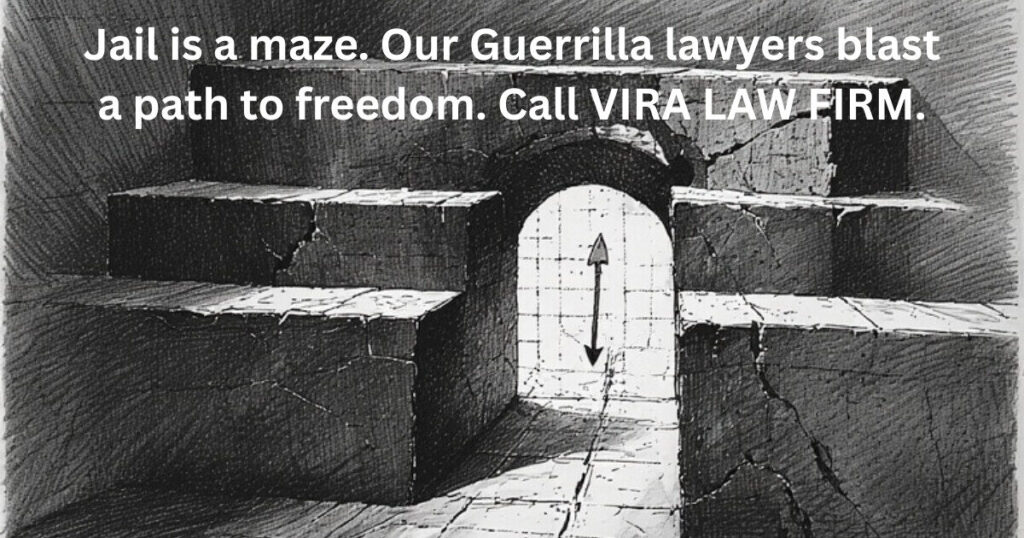
Prison is a labyrinth. Our guerrilla lawyers open the way to freedom. Call VIRA LAW FIRM.
Final Social Awareness Legal Conclusion:
Every detention leaves families deeply shaken, but knowledge restores strength. Understanding Washtenaw County Jail rights ensures dignity, fairness, and lawful treatment for every detained person. Share legal awareness generously as informed families protect their loved ones with confidence and compassion.
#Hashtag:
#WashTenRightsGuide2025.
#WashTenNoJealousRights
#Michigan Prisoner Law
#CrossBorderDefense
#CIMTRisk
#WashTenNowLegalUpdate
Cross-border crisis? We connect Washtenaw County Jail to your world. Don't feel helpless!
VIRA law firm: Legal services for Individual, Business, Freelancer, Gig Worker and Organisation
VIRA LAW FIRM's Payment Gatways For Fees & Expenses:
Law-truth-integrity
Legal Disclaimer:
AskByLaw.com is owned and operated by VIRA Legal Commodities and managed by Viren S. Dave, Advocate. The content on this website is provided for general legal awareness and informational purposes only and does not constitute or consider legal advice. No guarantee and no promise are made regarding the outcome of any legal matter or issues provided by the website content. AskByLaw.com and its owner will not be liable for any use of the information provided for legal awareness as legal advice. For legal advice, users must consult Viren S. Dave, Advocate, in person by prior appointment.
www.Askbylaw.com is owned and managed by Certified Advocate Viren S. Dave. Advocate is a unique platform intended for general informational purposes and legal awareness. It does not provide legal advice or engage in solicitation of legal services, and users relying on its content do so at their own risk. The owner of Advocate Viren S. Dave and VIRA Law Firm is not liable for any outcomes arising from the use of this information. Users needing legal advice or services must consult Advocate Viren S. Dave by appointment.