7 Seven Hidden Legal Dangers Families Face During Immigration
Welcome VIRA Newspaper Reader, I am speaking to you today about the 7 Seven Rules as someone who has guided terrified families around the world. Clients from India, the UK, and the United States describe similar concerns. Their voices shake when raids occur near their neighborhoods unexpectedly. They fear mistaken detention because identification errors occur under pressure. This article explains seven legal dangers families ignore until disaster strikes.
7 Seven Warning Signs Show Rights Can Be Misread During Enforcement Waves:
I remember one mother trembling as she described officers questioning her son. He was a citizen; yet documentation confusion still created immediate tension. Such incidents happen when enforcement actions accelerate beyond administrative capacity.
Families must understand seven legal vulnerabilities created by high speed operations. Awareness allows calm reactions when pressure causes mis-understandings during chaos.
Mistaken detention patterns emerge when databases contain outdated personal records. Agencies rely on imperfect systems during rapid operations and crowded environments. Seven risk zones form whenever identification depends on inconsistent digital sources.
Families with mixed immigration status face disproportionate risk during chaotic enforcement. Preparation remains the strongest shield against identity confusion during heavy raids.
Documentation mismatches often trigger dangerous misinterpretations during stressful moments. Names spelled incorrectly lead to immediate questioning before resolution eventually occurs.
Seven categories of individuals face heightened exposure to administrative errors. Citizens with foreign-born parents often encounter suspicion during rapid document checks.
Awareness empowers families to prepare before misunderstandings escalate during enforcement.
Seven risks threaten families during crackdowns. Protect yours now
USA reader: 7 Seven Legal Gaps That Affected Citizens During Crackdown
The United States uses wide discretion during immigration enforcement operations nationally. Citizens occasionally face questioning because data inaccuracies remain common nationwide. Seven legal gaps increase the chance of mistaken detentions during high pressure situations
First:
Identification systems depend heavily on inconsistent state-level documentation processes
Second:
Rapid operations reduce time for clear verification during tense field encounters.
Third:
Individuals sharing common surnames sometimes match outdated immigration records.
Four:
Temporary database outages delay real time confirmation of legal status.
Fifth:
Accent based assumptions sometimes influence initial officer interpretations unfairly.
Sixth:
Old administrative files occasionally contain residual noncitizen classifications.
Seventh:
Mixed status households confuse officers who see varied documents during questioning.
I share these insights as someone who has represented many confused families. Their fear often resembles fear I once saw in my own relatives overseas. Rights remain secure only when citizens understand the seven gaps explained above. Knowledge anchors calm decision making when un-expected questioning occurs suddenly.
Prepared families reduce risk by maintaining accessible identification at stressful moments.
Mistaken detention rises when documents fail. Prepare immediately.”
UK Readers: 7 Seven Verification Obstacles Families Overlook
The UK’s enforcement agencies rely on layered identity systems with strict verification protocols. Families sometimes struggle when older documents contain clerical errors before verification finishes. Seven verification obstacles often surprise citizens when enforcement campaigns intensify unexpectedly.
First:
Outdated Home Office records occasionally conflict with current documentation versions.
Second:
Birth records with minor spelling variations cause temporary database confusion.
Third:
Parentage documentation sometimes lacks clarity in older registrations nationwide.
Fourth:
Digital identity systems occasionally return delayed confirmation results.
Fifth:
Naturalized citizens sometimes face additional questions during rapid enforcement sweeps.
Sixth:
Residents with dual nationality often experience deeper verification procedures
Seventh:
border region residents face status questions because of complex administrative histories.
I once advised a British father whose son faced heavy questioning outside school. He was legally secure, yet panic overwhelmed him because confusion escalated quickly. These seven obstacles cause emotional trauma when families expect accurate recognition always
Understanding these challenges creates strength for those navigating UK verification processes. Prepared families endure enforcement periods with greater confidence and reduced fear.
Identity errors escalate fast. Guard your family today.”
Indian Reader: 7 Seven Documentation Weakness Exposed During Verification:
India’s identity landscape combines multiple registries with varied documentation standards. Enforcement agencies sometimes encounter mismatched records while validating status rapidly. 7 Seven documentation weaknesses create vulnerability during nationwide verification campaigns.
First:
Old village records often lack standardized spelling conventions historically.
Second:
parentage disputes often arise when old certificates contain unclear details.
Third:
Migration between states sometimes creates conflicting registration details.
Fourth:
digital conversion processes sometimes introduce errors into scanned records.
Fifth:
families displaced historically often lack archived documentation entirely.
Sixth:
Naturalized citizens face additional scrutiny during large-scale verification attempts.
Seventh:
Multi-generational households often possess incomplete records across relatives.
A client once cried as she described officers questioning her illiterate father. His old records contained errors that confused verification officers significantly. These experiences taught me the emotional cost of documentation vulnerability. Families gain stability when they recognize seven weak points early. Preparation reduces stress during verification waves across India.
7 Seven Cross-Border Stayle Afftected India, UK and USA Families Equally:
Despite different legal systems, enforcement errors follow seven predictable global patterns. Citizens risk questioning whenever data sources remain inconsistent or outdated worldwide. Mixed status households face the highest confusion across three major jurisdictions. Documentation precision becomes essential as governments accelerate enforcement activities. Cross-border families require proactive planning to stay protected during stressful operations.
These patterns appear repeatedly across India, the UK, and the United States. I share them after years of guiding frightened families through unexpected events. Awareness protects families facing unpredictable enforcement environments globally.
Knowledge remains the most effective defence against administrative confusion today. Families should maintain updated identity documents at all times internationally. They should store digital copies in secure locations for rapid verification. Cross-border planning reduces risk before enforcement operations intensify nationwide.
VIRA LAW FIRM supports families preparing for multi-jurisdictional documentation risks.
Prepared families remain safer during sudden shifts in enforcement systems
Seven dangers grow during enforcement waves. Stay informed always.”
Key Takeaways:
7 Seven major legal risks emerge during large enforcement actions.
Citizens sometimes face mistaken questioning due to data errors.
India, UK, and US share seven similar verification weaknesses.
Families need proactive identity preparation across jurisdictions.
Fear based planning prevents legal harm during chaotic operations.
Hashtags:
#SevenLegalRisks
#GlobalIdentityRights
#ImmigrationAwareness2025
#CrossBorderFamilies
Frequentely Asked Questions: (FAQ)
1. Can citizens be questioned during immigration enforcement?
Yes, questioning occurs sometimes when records contain unclear information.
2. Why do citizens face documentation errors?
Data inconsistencies and outdated registries create misinterpretations during checks.
3. Do India, UK, and US share similar issues?
Yes, seven predictable verification weaknesses appear across all three regions.
4. How can families reduce risk?
Maintain complete documentation and consult legal experts early.
5. Why act now?
Delays increase vulnerability when enforcement campaigns accelerate unexpectedly.
Social And Legal Massage:
Knowledge protects families when confusion rises. Documentation preserves rights when systems fail unexpectedly.
Share this message to safeguard others from unseen legal risks.
Delay increases danger when enforcement actions expand without advance warning globally. Families must priorities document preparation before verification campaigns intensify unexpectedly. I urge you to secure guidance before confusion harms family stability tomorrow. Your rights remain strongest when preparation begins early and consistently.
Protect Your Family Before These Seven Risks Strike
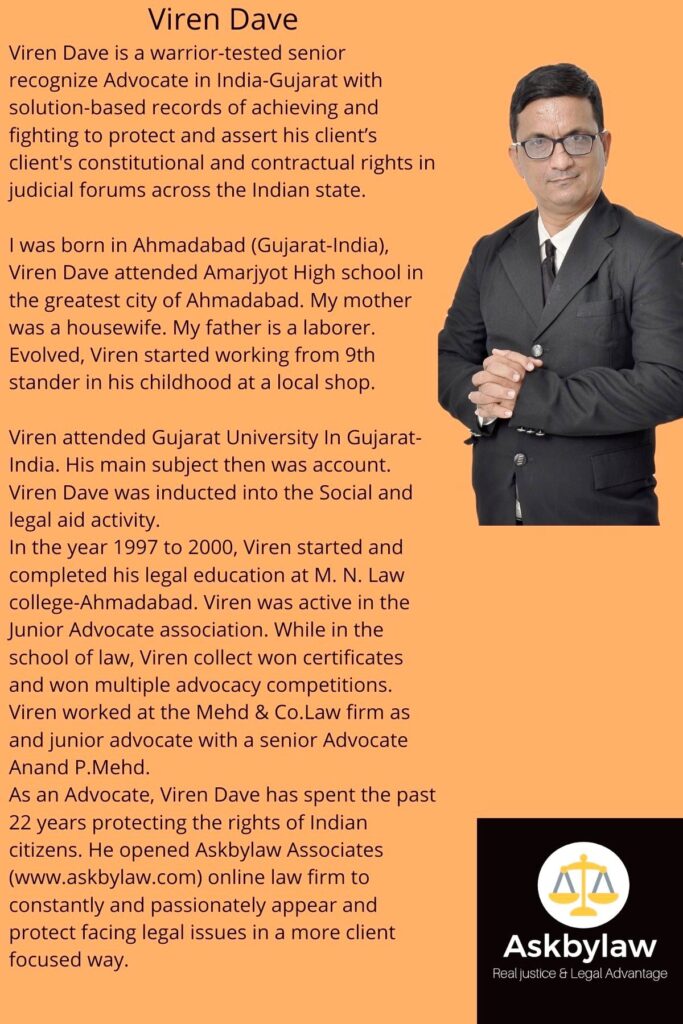
AskByLaw.com is owned and operated by VIRA Legal Commodities and managed by Viren S. Dave, Advocate. The content on this website is provided for general legal awareness and informational purposes only and does not constitute or consider legal advice. No guarantee and no promise are made regarding the outcome of any legal matter or issues provided by the website content. AskByLaw.com and its owner will not be liable for any use of the information provided for legal awareness as legal advice. For legal advice, users must consult Viren S. Dave, Advocate, in person by prior appointment.
www.Askbylaw.com is owned and managed by Certified Advocate Viren S. Dave. Advocate is a unique platform intended for general informational purposes and legal awareness. It does not provide legal advice or engage in solicitation of legal services, and users relying on its content do so at their own risk. The owner of Advocate Viren S. Dave and VIRA Law Firm is not liable for any outcomes arising from the use of this information. Users needing legal advice or services must consult Advocate Viren S. Dave by appointment.